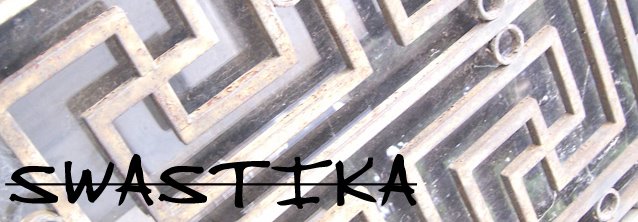
The Swastika is a symbol that belongs too the entire human race they appear in many different forms and in almost all our ancestral cultures, exsisting for more than 15.000 years with different names.It was and always will be a symbol of protection and good luck.
Unfortunately during the second world war the nazi's were effective in there misuse of the symbol , from that moment on it belonged to intolerance ,hatred and fear and has a bad image even in present day and in many countries it is a symbol forbidden too use, altough the nazi swastika is a black cross in 45 degrees pointing to the right on white with a red background, most of all the other swastikas are postive and there's no reason to connect this to the genocide.
This is a space which we try too recuperate and share the positive swastika and its meaning as a part of cultural heritage too humanity, here in the blog are more than thousand examples.
I like to share with you, Everyday a new foto of a Swastika.
The beautifull Swastika wich is used in daily life:
As decoration
In Art
As in Ritual
In Body
I would like that You share also with everybody
your Swastikas.
So if you make a Photo from your Swastikaobject or art and send me this i gonna publish
it here.
Send Photos to Swastikamail
swastikacross@gmail.com